

We’ve all had that moment when something unexpected throws off your day. Maybe it’s a traffic jam, a sudden rainstorm, or your phone dying when you need it most. But imagine this happening on a highway as major as I-75, not because of traffic, but because the power that keeps everything moving suddenly disappeared.
During the I-75 power line shutdown, drivers, commuters, and nearby residents experienced a scenario many of us only think about during disasters. Signals went dark, electronic signs stopped working, and for a moment, the highway became unpredictable. And while power outages aren’t new, the way this particular incident unfolded showed just how fragile our reliance on electricity really is.
Trust me, when you understand how the shutdown affected traffic, I-75 Power Line Shutdown homes, businesses, and even emergency services, you’ll never take a functioning power grid for granted again.
Why I-75 Is So Critical
Before diving into the shutdown, it’s important to understand why Interstate 75 matters.
I-75 is one of the most crucial north-south highways in the United States. Stretching across multiple states, it carries thousands of commuters, freight trucks, and travelers daily. The highway connects major cities and economic hubs, serving not only transportation but also commerce and emergency services.
So when a major disruption like a power line outage occurs, it doesn’t just delay a few drivers. It affects logistics, local economies, and even public safety. In other words, I-75 is more than a road — it’s a lifeline.
What Happened During the Power Line Shutdown
The I-75 power line shutdown was triggered when key transmission lines near the highway were damaged. While the exact cause varies depending on the section of the highway, typical triggers include:
- Severe weather damaging overhead power lines
- Fallen trees or debris during storms
- Construction accidents
- Vehicle collisions with utility poles
- Aging infrastructure giving way
Once the lines were compromised, utility companies had no choice but to shut down power temporarily to prevent hazards like fires or electrocution.
And this wasn’t just an inconvenience — the impact rippled across multiple layers of daily life.
Immediate Impact on Traffic
One of the first and most visible consequences was on traffic flow.
Chaos on the Highway
- Traffic signals stopped working, creating confusion at intersections
- Electronic highway signs went dark, leaving drivers uninformed
- Ramp meters and toll systems became inoperable
- GPS and mobile traffic apps struggled due to connectivity issues
Drivers were forced to slow down, navigate intersections manually, and rely on instinct rather than technology. For many, even a short commute turned into hours of stress and uncertainty.
Drivers’ Experiences
If you were stuck during the shutdown, I-75 Power Line Shutdown you probably felt frustration, anxiety, and helplessness. Families traveling, workers commuting, and emergency responders all faced challenges. Kids grew restless, phones lost battery power, and vehicles overheated in stalled traffic.
It was a perfect storm of stress, and it illustrated just how dependent we’ve become on uninterrupted power.
Effect on Local Communities
The shutdown didn’t only impact drivers. Nearby communities experienced power loss as well.
Homes and Families
- Refrigerators stopped working, risking food spoilage
- Heating and cooling systems failed, affecting comfort and safety
- Internet and phone connectivity became unreliable
- Residents using medical devices faced serious risks
Suddenly, what we take for granted — electricity — became a source of worry. Families had to adapt quickly, improvising with flashlights, portable chargers, and other emergency measures.
Emotional Toll
Beyond physical inconvenience, the shutdown caused stress and anxiety. Parents worried about children, elderly residents worried about health, and everyone felt the tension of uncertainty.
It was a reminder that infrastructure failures aren’t just technical problems — they affect real lives in very personal ways.
Impact on Businesses
The economic consequences were immediate.
Small Businesses and Retail
- Restaurants had to discard perishable food
- Gas stations couldn’t pump fuel, stranding drivers
- Retail stores and service stations had to close
- Hotels and accommodations struggled with check-ins
Many small businesses operate on thin margins, meaning even a few hours of lost revenue can have significant effects. The shutdown underscored the fragility of local economies in the face of infrastructure failures.
Pressure on Emergency Services
Emergency responders were under immense pressure during the outage.
Challenges Faced
- Traffic control without functioning signals
- Increased risk of accidents
- Delays in response times
- Higher call volumes
Police officers manually directed intersections, while firefighters and medical teams worked longer hours under tense conditions. The shutdown illustrated how critical power is not just for convenience but for public safety.
Why Power Lines Near Highways Are Vulnerable
Power lines near highways face unique challenges:
- Constant vibrations from heavy traffic
- Exposure to weather elements
- Risk of vehicle collisions
- Difficulty in accessing damaged lines for repairs
Much of the infrastructure near I-75 was built decades ago. The combination of age, environmental stress, and high traffic volume makes these lines prone to failure.
How Utility Companies Responded
Utility crews followed standard protocols to restore power safely.
Steps Taken
- Secure the affected area to prevent hazards
- Shut down power to prevent electrocution or fire
- Inspect and assess damage
- Repair or replace damaged lines
- Test and gradually restore electricity
Rushing the process can be dangerous, which is why restoration times often feel long to the public.
Communication Challenges During the Outage
One of the major frustrations during the I-75 power line shutdown was the lack of timely information.
- Drivers were unsure of alternate routes
- Residents didn’t know when power would return
- Businesses struggled to plan operations
Transparency and real-time updates could have reduced stress and confusion. Clear communication is critical during such incidents.
Social Media and Public Reaction
As expected, social media buzzed with updates, complaints, and support.
- People shared photos of stalled traffic and dark intersections
- Residents posted about home outages
- Some criticized authorities, while others praised emergency crews
The online conversation reflected both frustration and the desire for better preparedness.
Lessons Learned
The I-75 power line shutdown offered valuable lessons:
For Authorities
- Invest in modern, resilient infrastructure
- Improve real-time communication systems
- Strengthen emergency response coordination
- Develop alternate routing and contingency plans
For Drivers and Residents
- Keep emergency kits and supplies in vehicles
- Carry portable chargers and flashlights
- Download offline maps
- Stay informed through official channels
- Practice patience during outages
Could It Happen Again?
Yes. As long as power lines exist near highways like I-75, outages remain possible. But better planning, modernization, and response systems can reduce both the likelihood and severity of disruptions.
How to Stay Prepared
Preparation makes a huge difference:
- Keep bottled water and snacks
- Maintain a half-full fuel tank
- Store flashlights, blankets, and first-aid kits
- Carry a portable power bank
- Follow utility and traffic alerts
Even small measures can reduce stress and ensure safety during outages.
Broader Implications
The shutdown highlighted how deeply interconnected modern infrastructure is. Transportation, electricity, communication — when one system fails, others quickly follow. It also emphasized the importance of investing in resilient infrastructure and emergency preparedness.
Human Perspective
Beyond technical and economic impacts, the shutdown affected people’s emotions and routines. Families faced uncertainty, businesses faced losses, and drivers experienced stress. These human aspects are often overlooked in technical reports but are central to understanding the full impact of outages.
Moving Forward
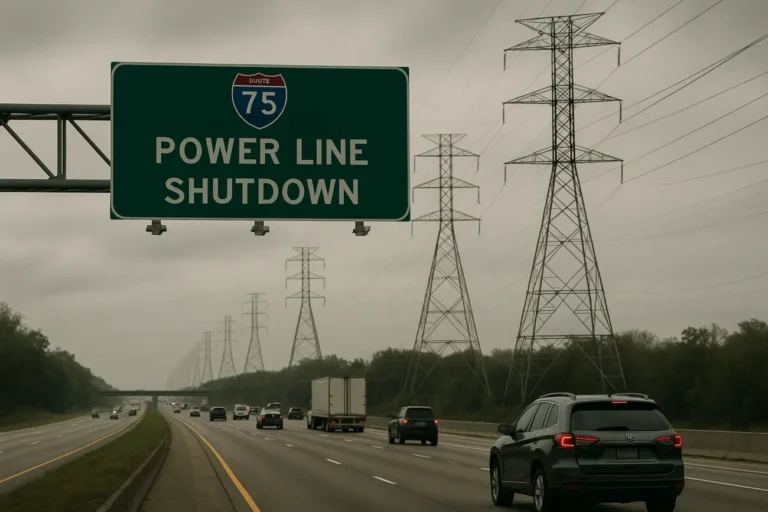
The I-75 power line shutdown serves as a wake-up call. Authorities are rethinking infrastructure investments, communication strategies, and emergency coordination. Drivers and residents are reminded to stay prepared, patient, and aware.
It’s a lesson that combines technology, human behavior, and public safety — and one that will inform planning for years to come.
Conclusion: Lessons for Everyone
The I-75 power line shutdown was more than a technical issue. It disrupted lives, businesses, and public systems. But it also offered important lessons about preparedness, resilience, and the human side of infrastructure.
While we can’t prevent every outage, awareness and preparation can reduce their impact. And as communities, authorities, and individuals learn from these events, future shutdowns — when they happen — can be managed more effectively.
FAQs About the I-75 Power Line Shutdown
What caused the I-75 power line shutdown?
The shutdown was caused by damage to transmission lines near the highway, often triggered by weather, construction, vehicle accidents, or aging infrastructure.
How long did the outage last?
Duration varied by location, but restoration typically took several hours as utility crews worked safely to repair damage.
Were nearby homes affected?
Yes, many homes and businesses near I-75 experienced temporary power outages during the shutdown.
How can drivers prepare for future shutdowns?
Drivers should keep emergency kits, portable chargers, offline maps, and follow official traffic and utility alerts to stay safe and informed.
