

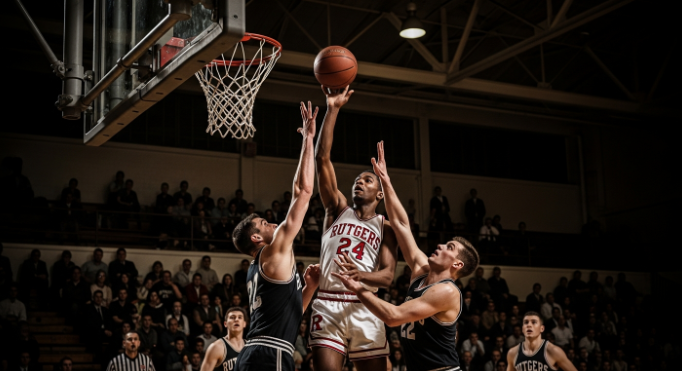
Rutgers Basketball, located in New Jersey, has a storied history in college basketball that spans over a century. While often overshadowed by powerhouse programs, Rutgers basketball has consistently demonstrated resilience, competitiveness, and the ability to surprise opponents on a national stage. Known for its passionate fanbase and strong commitment to athletic excellence, the Scarlet Knights have become a symbol of growth and ambition in NCAA basketball.
Early History and Foundation
Rutgers basketball dates back to the early 20th century. The program officially began in 1906, a time when college basketball itself was still developing across the United States. In these formative years, Rutgers competed regionally, laying the groundwork for what would become a program capable of national recognition.
During the early decades, Rutgers faced challenges common to many programs of the era, including limited resources, smaller rosters, and evolving rules. Nevertheless, the team cultivated a reputation for tenacity, emphasizing defense, discipline, and teamwork over individual stardom. This foundation would later prove critical as the program navigated the complexities of modern college basketball.
Rise in Prominence
Rutgers’ first major breakthrough came in the 1970s under coach Tom Young. Young, an innovative and strategic leader, emphasized fundamentals, fast breaks, and conditioning, transforming Rutgers into a competitive force in the Eastern Collegiate Athletic Conference (ECAC). Young’s era saw Rutgers frequently contend with top programs, earning respect and recognition across the college basketball landscape.
The pinnacle of this rise occurred during the 1975–76 season, when Rutgers, led by a mix of experienced upperclassmen and promising underclassmen, achieved an undefeated regular season. This incredible feat culminated in the Scarlet Knights advancing to the NCAA tournament finals. Though they fell short against a dominant Indiana team, Rutgers’ appearance in the championship game remains one of the most celebrated moments in the program’s history.
Conference Affiliations and Evolution
Throughout its history, Rutgers basketball has navigated various conferences, each offering unique challenges and opportunities. Originally part of regional leagues, Rutgers joined the Atlantic 10 in the late 20th century, allowing the program to face higher-level competition regularly. This exposure helped develop players, improve recruiting, and strengthen the overall competitiveness of the team.
In 2014, Rutgers became a member of the Big Ten Conference, one of the most prestigious conferences in college basketball. This move marked a significant step forward, positioning Rutgers to compete against elite programs like Michigan State, Indiana, and Ohio State. While the transition presented challenges, including tougher competition and higher expectations, it also provided national exposure and the chance to attract top-tier talent.
Coaching Legacy
Rutgers basketball has benefited from visionary coaching throughout its history. Tom Young’s contributions are legendary, but subsequent coaches have also left their mark. Coaches such as Fred Hill and Eddie Jordan helped stabilize the program during periods of transition, maintaining competitiveness and instilling a culture of discipline and resilience.
Steve Pikiell, the current head coach, has been particularly influential in recent years. Since taking over the program, Pikiell has emphasized defense, teamwork, and recruiting players who fit the program’s culture. His approach has revitalized Rutgers basketball, leading to improved performance in the Big Ten and creating a sense of pride among fans and players alike.
Style of Play
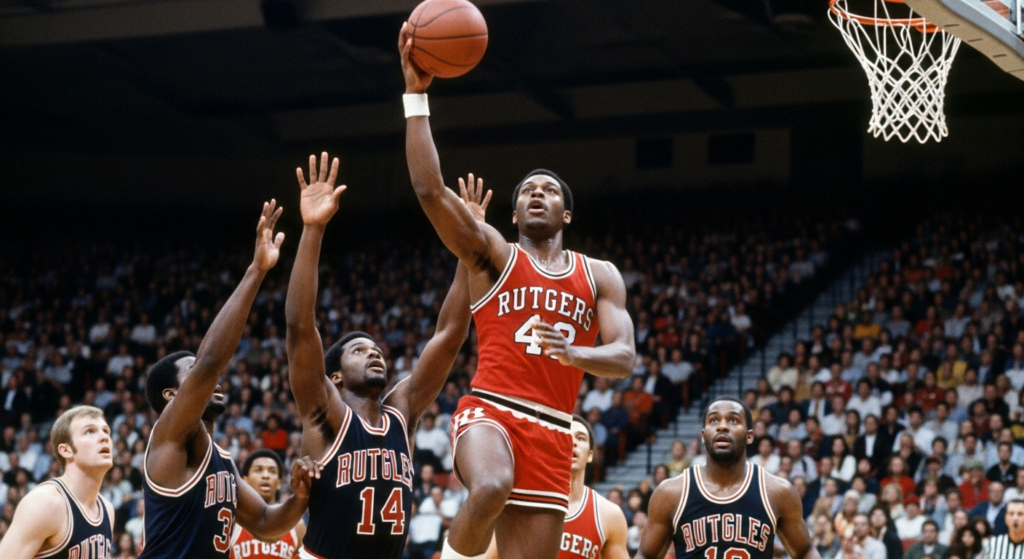
Rutgers basketball is known for a gritty, disciplined style of play. The team often emphasizes strong defensive schemes, including man-to-man coverage and strategic zone defenses, designed to disrupt opponents’ offensive flow. Offensively, Rutgers focuses on balanced scoring, teamwork, and exploiting mismatches, with an emphasis on high-percentage shots and minimizing turnovers.
This style reflects the program’s core philosophy: success comes from preparation, effort, and unity. While individual stars occasionally emerge, the Scarlet Knights prioritize collective effort, ensuring that every player contributes to the team’s success.
Notable Players
Over the years, Rutgers has produced several standout players who have left a lasting impact on the program and, in some cases, the professional ranks. Some of the most notable include:
- Phil Sellers: A standout in the 1970s, Sellers was instrumental in Rutgers’ 1976 Final Four run. Known for his scoring ability and leadership, he remains one of the most celebrated players in program history.
- Eddie Jordan: Before becoming a coach, Jordan was a skilled point guard at Rutgers, later enjoying a professional career in the NBA.
- Quintrell Thomas: A key contributor in the modern era, Thomas’ athleticism and versatility helped Rutgers achieve strong performances in the Big Ten.
- Ron Harper Jr.: A rising star who continues to showcase Rutgers’ ability to develop talent capable of competing at the highest level.
These players exemplify the Scarlet Knights’ commitment to talent development, hard work, and competitive excellence.
Rivalries and Key Matchups
Rutgers basketball maintains several significant rivalries that highlight the program’s intensity and competitive spirit. One of the most notable is with Seton Hall University, a nearby institution with which Rutgers has shared a long-standing in-state rivalry. These matchups are often highly anticipated, drawing large crowds and intense media coverage.
Other key rivalries include games against Princeton University, reflecting historical Ivy League competition, and contests with Big Ten opponents like Michigan State and Indiana, where Rutgers tests itself against national-level competition. These rivalries are not only about wins and losses but also about pride, tradition, and recruiting leverage.
Facilities and Fan Experience
Rutgers basketball plays its home games at the Rutgers Athletic Center (the RAC), a venue that has been a cornerstone of the program for decades. The RAC provides an intimate and energetic environment, where fans are close to the action and players feed off the crowd’s enthusiasm. Plans for modern upgrades and potential new arenas are ongoing, aiming to enhance both player experience and fan engagement.
The Scarlet Knights’ fanbase is passionate and loyal, reflecting a deep connection to Rutgers University. Game days are community events, with students, alumni, and local supporters creating a vibrant atmosphere that adds energy and motivation for the players on the court.
Recruiting and Development

Recruiting has always been critical to Rutgers basketball’s success. The program focuses on identifying players with both skill and character, prioritizing those who fit the team’s culture of discipline, teamwork, and resilience. The move to the Big Ten has significantly boosted recruiting opportunities, allowing Rutgers to compete for top regional and national talent.
Player development is equally emphasized. From strength and conditioning programs to skill-specific coaching, Rutgers ensures that athletes maximize their potential. This commitment to growth helps maintain competitiveness in a challenging conference while preparing players for professional opportunities.
Recent Successes
Under Steve Pikiell, Rutgers basketball has experienced a resurgence. The team has improved its Big Ten performance, achieving key wins against highly ranked opponents and returning to the NCAA tournament after a long absence. These achievements have reinvigorated the fanbase, attracted stronger recruits, and reinforced the program’s national relevance.
The Scarlet Knights’ recent successes reflect a combination of strategic coaching, disciplined play, and a culture that values hard work and resilience. This upward trajectory has positioned Rutgers as a rising contender in the Big Ten and a program to watch on the national stage.
Challenges and Opportunities
Despite its growth, Rutgers basketball faces ongoing challenges. Competing in the Big Ten requires consistent excellence, depth in the roster, and the ability to attract top-tier talent in a region with numerous elite programs. Additionally, facility upgrades and investment in resources are crucial to sustaining competitiveness.
However, these challenges also present opportunities. Rutgers’ strong academic reputation, location in the populous Northeast corridor, and recent success under Pikiell make it an attractive destination for players and fans. Continued investment in recruiting, facilities, and community engagement will likely solidify Rutgers basketball’s status as a respected program in college basketball.
Community and Culture
Rutgers basketball is more than just a sport; it is a cultural touchstone for the university and the surrounding community. The program emphasizes academic achievement, community service, and leadership, helping players grow both on and off the court. This holistic approach strengthens the program’s reputation and fosters a sense of pride among students, alumni, and fans.
Community engagement initiatives, youth basketball clinics, and partnerships with local organizations further cement Rutgers’ role as a positive force in New Jersey and beyond. This connection between the team and its supporters enhances loyalty, boosts morale, and creates a lasting legacy.
Looking Ahead
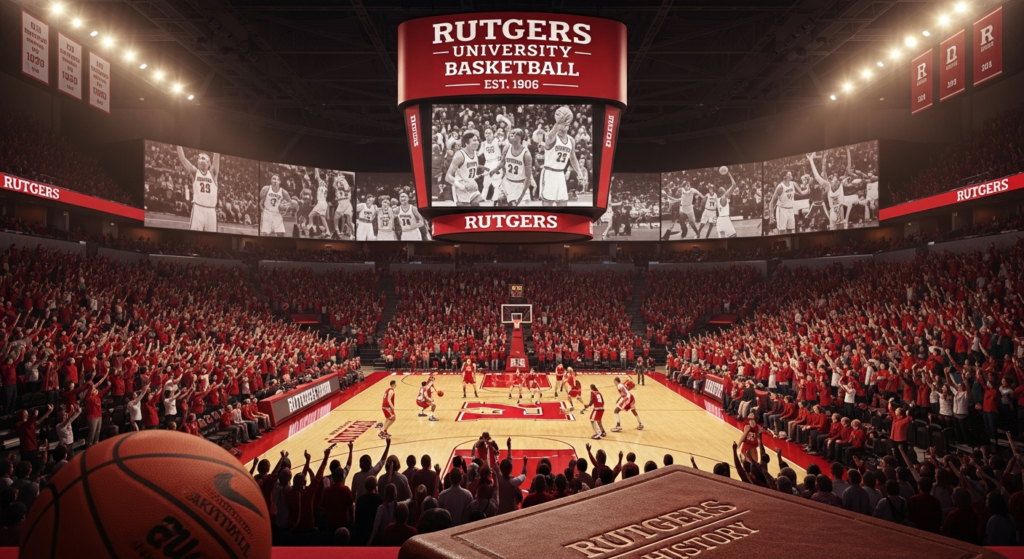
The future of Rutgers basketball appears bright. With a committed coaching staff, improved recruiting pipelines, and a growing fanbase, the Scarlet Knights are poised to compete at a high level in the Big Ten and nationally. Continued focus on player development, strategic recruitment, and investment in facilities will be key to sustaining this momentum.
Rutgers basketball’s journey reflects a broader story of resilience, growth, and ambition. From its early days to the modern era, the program has continually adapted, striving for excellence while maintaining a commitment to teamwork and community.
Conclusion
Rutgers basketball exemplifies the spirit of perseverance, growth, and dedication. While it has faced challenges, the program has continually evolved, achieving historic milestones and laying a foundation for future success. With strong leadership, a committed fanbase, and talented players, Rutgers is positioned to remain a competitive force in college basketball. The Scarlet Knights’ journey is a testament to the power of hard work, resilience, and collective effort, inspiring both players and fans alike.
FAQs
Q: When did Rutgers basketball start?
A: Rutgers basketball officially began in 1906, making it one of the older college basketball programs in the United States.
Q: What was Rutgers’ greatest achievement in basketball?
A: Rutgers’ most celebrated achievement came in the 1975–76 season when the team reached the NCAA tournament finals with an undefeated regular season.
Q: Who is the current head coach of Rutgers basketball?
A: Steve Pikiell is the current head coach, known for revitalizing the program and emphasizing defense, teamwork, and player development.
Q: What conference does Rutgers basketball compete in?
A: Rutgers is a member of the Big Ten Conference, one of the top collegiate basketball conferences in the country.
Q: Who are some notable Rutgers basketball players?
A: Notable players include Phil Sellers, Eddie Jordan, Quintrell Thomas, and Ron Harper Jr., among others.
Q: Where does Rutgers play its home games?
A: Rutgers plays its home games at the Rutgers Athletic Center (RAC), a venue known for its intimate and energetic atmosphere.
Q: Does Rutgers basketball have any major rivalries?
A: Yes, Rutgers has a significant rivalry with Seton Hall University, as well as competitive matchups with Big Ten teams and historical contests against Princeton.
Q: How can fans support Rutgers basketball?
A: Fans can support the team by attending games, following the team online, participating in community events, and engaging with the university’s athletic programs.
