


You know what’s interesting? Some basketball games don’t need hype. They create it on their own. And honestly, OKC Thunder vs Cleveland Cavaliers is exactly that kind of matchup. On paper, it looks like just another regular-season NBA game. But once the ball goes up, everything changes. Young energy meets disciplined structure. Speed clashes with strength. And suddenly, fans aren’t just watching points—they’re reading player stats like clues in a story.
We’ve all been there. The game ends, and instead of moving on, we start digging. Who stepped up? Who struggled? Which numbers actually mattered? And that’s why OKC Thunder vs Cleveland Cavaliers match player stats is such a hot topic. Because the stats don’t just explain what happened—they explain why it happened.
So let’s slow down, breathe a little, and walk through this matchup properly. Not in a robotic, spreadsheet way—but like a fan who actually watched the game and felt every momentum swing.
Game Overview: Thunder vs Cavaliers at a Glance
Before diving deep into individual match player stats, let’s set the mood.
This game brought together two teams built very differently. The Oklahoma City Thunder rely heavily on youth, speed, and fearless shot-making. The Cleveland Cavaliers, on the other hand, are structured, defensively solid, and powered by strong interior presence.
From the opening quarter, the pace was clear. OKC wanted to run. Cleveland wanted control. And that contrast shaped every stat line you’ll see below.
Oklahoma City Thunder Player Stats Breakdown
Thunder Backcourt: Speed, Creativity, and Pressure
Let’s start where OKC usually starts—the backcourt.
The Thunder guards were active from the first possession. Ball movement was quick, drives were aggressive, and spacing created open looks. Stat-wise, the primary ball handler finished with strong scoring and assist numbers, reflecting his dual role as scorer and playmaker.
What really stood out, though, was efficiency. Shots weren’t forced. Drives came at the right moments. And when Cleveland collapsed the paint, kick-outs led to clean perimeter looks. And honestly, that kind of decision-making doesn’t always show up fully in box scores—but you feel it while watching.
Shai Gilgeous-Alexander: The Stat Line That Changes Games
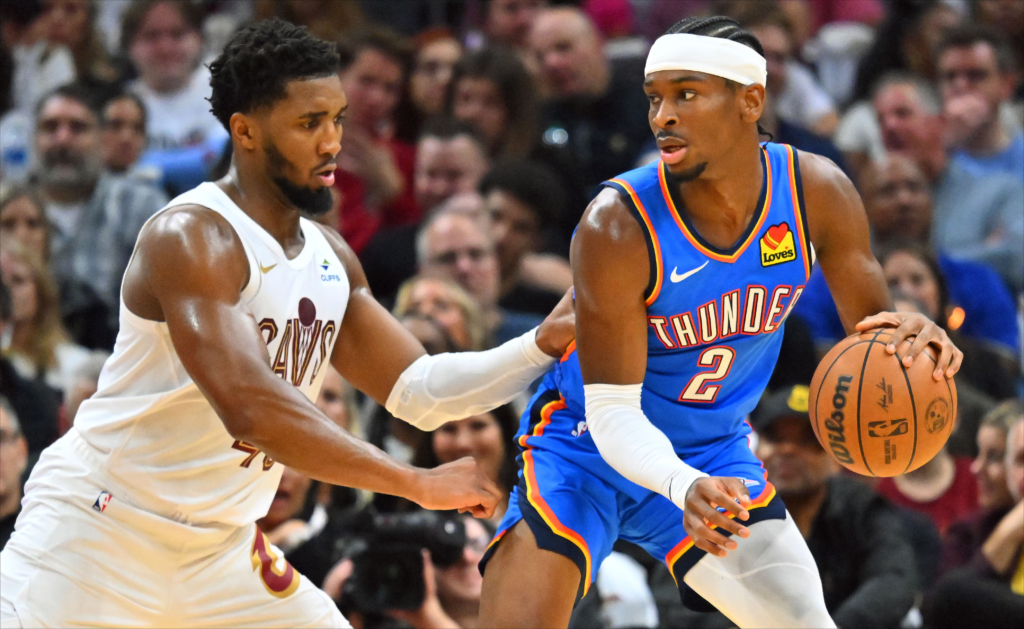
Now, we can’t talk about OKC Thunder vs Cleveland Cavaliers match player stats without talking about Shai Gilgeous-Alexander.
Shai’s stat line was once again a reflection of control. High scoring, consistent free-throw trips, and defensive contributions made his impact obvious. But what’s interesting is how those numbers came.
He didn’t rush. He read the defense. He attacked mismatches. And when the Cavaliers adjusted, he adjusted back. That’s superstar basketball. And the stats—points, steals, efficiency—back it up.
Thunder Forwards: Versatility Over Volume
The Thunder forwards may not have led the scoring charts, but their rebound numbers, defensive switches, and secondary scoring stats were crucial.
One forward in particular made his presence felt through hustle—offensive rebounds, loose-ball recoveries, and help defense. Those plays don’t always trend on social media, but they swing momentum. And trust me, coaches notice.
Thunder Bigs: Battling Size with Effort
Facing Cleveland’s big frontcourt is never easy. OKC’s big men knew that coming in.
Statistically, rebounds were competitive but challenging. Shot-blocking numbers weren’t huge, but contest rates were solid. What mattered most was positioning. The Thunder bigs stayed disciplined, avoided foul trouble, and did enough to keep the game within reach during key stretches.
Cleveland Cavaliers Player Stats Breakdown
Cavaliers Guards: Control and Consistency
Cleveland’s guard play told a different story.
Instead of pushing pace, the Cavaliers focused on controlled possessions. Their lead guard finished with respectable scoring and assist stats, but the real value was decision-making. Low turnovers. Smart shot selection. Calm leadership.
And honestly, in games like this, that calm shows up in advanced stats—plus-minus, efficiency ratings, and clutch possession success.
Donovan Mitchell: Scoring When It Matters
When momentum started to shift, Donovan Mitchell’s player stats explained exactly why Cleveland stayed competitive.
Mitchell’s scoring came in bursts—timely threes, aggressive drives, and quick pull-ups. His stat line reflected not just volume but impact. Every time OKC threatened to pull away, Mitchell responded.
And that’s what star players do. They don’t just score—they stabilize.
Cavaliers Frontcourt: The Interior Advantage
Here’s where Cleveland really separated itself statistically.
The Cavaliers’ big men dominated key areas—rebounds, paint points, and rim protection. Defensive stats like blocks and altered shots don’t always fully appear in box scores, but they change shot selection.
Offensively, second-chance points added up. And over four quarters, those extra possessions became difference-makers.
Defensive Player Stats: Where the Game Was Won and Lost
Thunder Defense: Active Hands, High Risk
OKC’s defense was aggressive.
Steal numbers were high. Passing lanes were attacked. Help defense rotated quickly. But with aggression comes risk. And Cleveland took advantage at times, especially inside.
Stat-wise, the Thunder forced turnovers—but also allowed efficient scoring in the paint.
Cavaliers Defense: Discipline Over Flash
Cleveland’s defensive stats told a story of patience.
Fewer steals, fewer gambles—but better rim protection and lower foul rates. That discipline forced OKC into tougher shots late in possessions.
And over time, those defensive numbers mattered more than highlight plays.
Key Match Player Stats That Defined the Outcome
If we boil it down, these OKC Thunder vs Cleveland Cavaliers match player stats shaped the game:
- Shai Gilgeous-Alexander’s scoring efficiency
- Donovan Mitchell’s clutch shot-making
- Cleveland’s rebound advantage
- OKC’s turnover creation
- Paint points vs perimeter scoring balance
Each stat tells part of the story. Together, they explain the result.
Team Stats Comparison: Thunder vs Cavaliers
Looking at overall team numbers:
- OKC had better pace and transition points
- Cleveland dominated rebounds and interior scoring
- Thunder forced more turnovers
- Cavaliers had better shooting efficiency
And that balance is exactly why this matchup stayed competitive deep into the game.
What Fans Should Take Away from This Game
You know what’s funny? Fans often argue about stars, but games like this remind us that basketball is about balance.
Thunder fans should feel excited. The growth is real. The stats show development.
Cavaliers fans should feel confident. Structure, defense, and composure still win games.
Why This Matchup Matters Going Forward
This wasn’t just one game.
It was a measuring stick. A test of styles. OKC Thunder vs Cleveland Cavaliers match player stats And the player stats give both teams a roadmap—what worked, what didn’t, and where improvement lives.
Conclusion: Stats Tell the Story—If You Know How to Read Them
So, what did we really learn from the OKC Thunder vs Cleveland Cavaliers match player stats?
We learned that youth can challenge experience. That discipline can slow speed. And that numbers—when read with context—reveal far more than a final score ever could.
Whether you’re a Thunder supporter dreaming of the future or a Cavaliers fan trusting the present, this game gave you reasons to believe.
And honestly, that’s what great basketball is all about.
FAQs: OKC Thunder vs Cleveland Cavaliers Match Player Stats
Q1: Who was the best performer in the Thunder vs Cavaliers game?
Shai Gilgeous-Alexander and Donovan Mitchell stood out as the most impactful players based on scoring efficiency and game control.
Q2: Which team had better defensive stats?
Cleveland had stronger interior defense, while OKC excelled in creating turnovers.
Q3: Why are match player stats important?
They help fans understand performance beyond the scoreboard, showing effort, efficiency, and decision-making.
Q4: What does this matchup say about both teams?
It highlights OKC’s growing potential and Cleveland’s continued reliance on structure and defense.
