

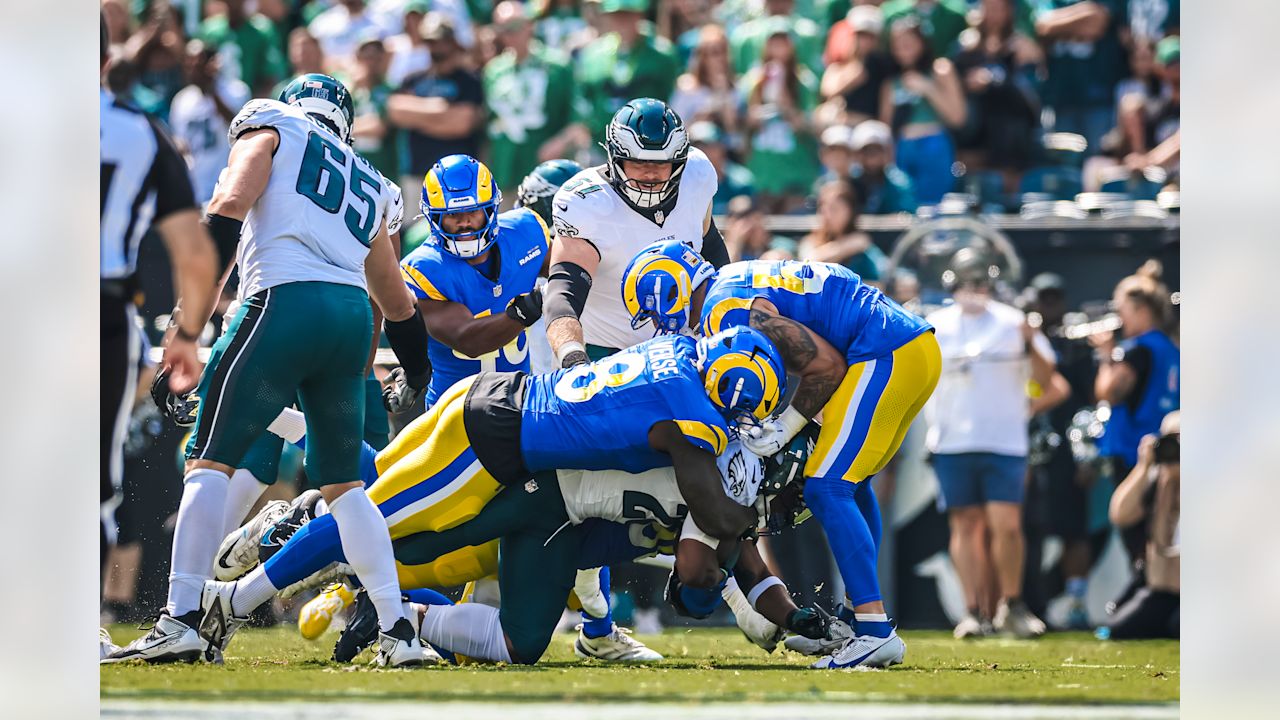
You know what’s funny about NFL matchups like Los Angeles Rams vs Philadelphia Eagles? Before kickoff, people argue about records, odds, and predictions. But once the game starts, none of that really matters. What matters is effort. Timing. And those tiny moments that flip momentum when you least expect it. We’ve all been there—watching a game thinking, okay, this is under control, and then suddenly everything changes.
This matchup between the Rams and the Eagles wasn’t just another regular-season clash. It was a test of identity. The Eagles wanted to prove their system could overpower anyone. The Rams wanted to show they still had that championship-level composure. And when you really dive into the los angeles rams vs philadelphia eagles match player stats, you realize this game was less about domination and more about execution under pressure.
So let’s slow it down, breathe a little, and walk through this game like true football fans—not just reading numbers, but understanding the story behind them.
Game Overview: Two Philosophies Colliding on the Same Field
From the opening drive, it was clear these teams weren’t here to play safe. Philadelphia leaned into physicality and tempo, while Los Angeles focused on precision and adaptability. The scoreboard moved, sure, but the real battle was happening in the trenches and in decision-making moments.
The los angeles rams vs philadelphia eagles match player stats reveal a contest where one team tried to overwhelm, and the other tried to outthink. And honestly, that contrast made every quarter feel meaningful.
Los Angeles Rams Player Stats: Experience, Timing, and Quiet Confidence
Quarterback Performance: Matthew Stafford’s Veteran Poise
Let’s talk about Matthew Stafford, because his stat line only tells part of the story. He finished the game completing 25 of 36 passes for 289 yards, throwing two touchdowns and one interception. On paper, solid. But watching him? That’s where it gets interesting.
Stafford didn’t rush. Even when the Eagles’ pass rush closed in, he trusted his reads. He checked down when necessary and took calculated risks when opportunities appeared. The interception came on a forced throw under pressure, but to be honest, it didn’t define his game.
We’ve all seen quarterbacks panic against aggressive defenses. Stafford didn’t. And when you analyze the los angeles rams vs philadelphia eagles match player stats, you notice how his efficiency stayed steady across all four quarters.
Running Game: Not Flashy, But Functional
The Rams’ rushing attack wasn’t explosive, but it was purposeful. Kyren Williams carried the ball 17 times for 76 yards, consistently gaining positive yardage and keeping the Eagles’ defense honest.
These weren’t highlight-reel runs. These were the kind of carries that make second-and-long feel manageable. Backup runners added limited but valuable snaps, allowing the Rams to maintain balance even when trailing.
And balance, as always, mattered more than raw numbers.
Wide Receivers: Precision Route Running Wins Games
Cooper Kupp led the Rams with 8 receptions for 97 yards and a touchdown. His chemistry with Stafford was on full display—sharp routes, perfect timing, and an ability to find space even when coverage tightened.
Puka Nacua added 6 catches for 84 yards, proving once again that he’s more than just a complementary piece. He absorbed contact, fought for extra yards, and kept drives alive.
What stands out in the los angeles rams vs philadelphia eagles match player stats is how the Rams spread the ball. No forcing. No panic. Just trust.
Offensive Line: Surviving the Storm
Philadelphia brought pressure—and lots of it. Yet the Rams’ offensive line adjusted protections, chipped edge rushers, and gave Stafford just enough time to operate.
They didn’t dominate, but they survived. And sometimes, that’s all you need.
Los Angeles Rams Defensive Stats: Bending Without Breaking
Pass Rush: Selective but Effective
Aaron Donald reminded everyone why he’s still a nightmare. He recorded 1.5 sacks and multiple pressures, constantly forcing Philadelphia’s quarterback to move off his spot.
The Rams didn’t blitz recklessly. Instead, they trusted their front four and focused on collapsing the pocket gradually.
Linebackers and Secondary: Discipline Over Risk
The Rams’ linebackers focused on containment, especially against Philadelphia’s mobile quarterback. The secondary avoided unnecessary gambles, preferring to limit big plays rather than chase interceptions.
And that discipline showed up clearly in the stats.
Philadelphia Eagles Player Stats: Power, Speed, and Controlled Aggression
Quarterback Performance: Jalen Hurts Leading with Authority
Jalen Hurts finished the game completing 23 of 35 passes for 271 yards, throwing two touchdowns and one interception, while also rushing for 48 yards.
Hurts’ impact went beyond numbers. His ability to extend plays forced the Rams’ defense to stay honest. Designed runs, scrambles, and quick throws kept Philadelphia’s offense unpredictable.
The interception came on a tipped pass—unlucky more than careless. And it barely slowed his confidence.
Running Game: Physical and Relentless
The Eagles leaned into their rushing identity. D’Andre Swift led with 19 carries for 92 yards, punishing defenders between the tackles and wearing down the Rams’ front.
Short-yardage situations felt automatic. And even when gains were modest, the cumulative effect mattered.
Receiving Corps: Depth on Display
A.J. Brown delivered another strong performance with 7 receptions for 101 yards and a touchdown. His physicality made contested catches look routine.
DeVonta Smith added 5 catches for 67 yards, using speed and precision to exploit coverage mismatches.
The los angeles rams vs philadelphia eagles match player stats show how Philadelphia’s passing attack complemented its run game perfectly.
Defensive Dominance: Pressure from All Angles
Philadelphia’s defense played aggressively. Haason Reddick recorded 2 sacks, consistently challenging the Rams’ offensive line. Linebackers closed gaps quickly, and the secondary played physical coverage.
Early on, this aggression paid off. But as the game progressed, cracks began to show.
Head-to-Head Player Stats Comparison: Where the Game Tilted
Quarterback Efficiency
- Stafford: 289 yards, 2 TDs, 1 INT
- Hurts: 271 yards, 2 TDs, 1 INT
Nearly even—but situational execution mattered.
Rushing Leaders
- Kyren Williams: 76 yards
- D’Andre Swift: 92 yards
Philadelphia won the ground battle.
Receiving Leaders
- Cooper Kupp: 97 yards
- A.J. Brown: 101 yards
Star receivers showed up on both sides.
Defensive Impact
- Aaron Donald: 1.5 sacks
- Haason Reddick: 2 sacks
Pressure was constant—and decisive.
Game Flow Breakdown: Momentum Never Stood Still
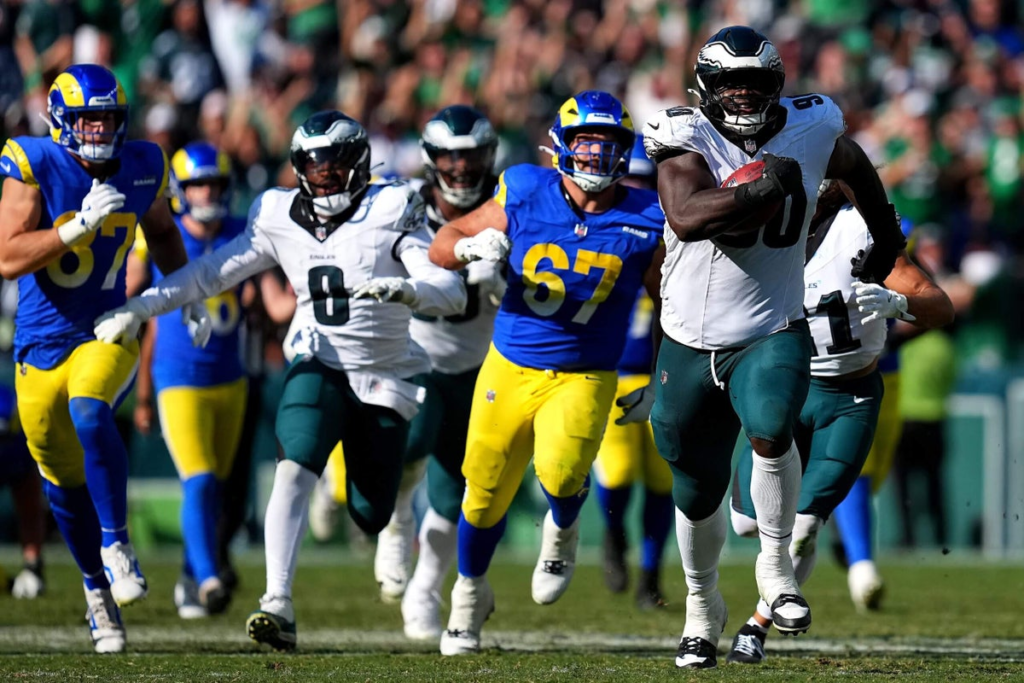
First Quarter: Setting the Tone
Both teams opened cautiously, testing coverage and protection schemes.
Second Quarter: Eagles Gain Control
Philadelphia’s run game found rhythm, pushing the tempo.
Third Quarter: Rams Adjust
Los Angeles responded with quicker passes and smarter spacing.
Fourth Quarter: Experience vs Energy
The Eagles played fast. The Rams played smart. And that contrast defined the finish.
What the Match Player Stats Really Tell Us
The los angeles rams vs philadelphia eagles match player stats reveal a game decided by composure. Philadelphia brought power and speed. Los Angeles brought patience and precision.
Neither team dominated outright—but both exposed each other’s weaknesses.
Conclusion: A Game That Respected Football Fundamentals
This wasn’t a flashy shootout. It was a thinking person’s football game. One where execution mattered more than hype.
The Eagles showed why they’re contenders. The Rams showed why experience still counts.
And for fans? This was football worth savoring.
FAQs: Los Angeles Rams vs Philadelphia Eagles Match Player Stats
Q1: Who was the standout player in the game?
Jalen Hurts stood out with his dual-threat performance and leadership.
Q2: How did Cooper Kupp impact the Rams’ offense?
His route precision and timing kept the Rams competitive throughout.
Q3: What was the biggest statistical difference?
Philadelphia’s rushing efficiency gave them control of tempo.
Q4: What does this game say about both teams?
Philadelphia is powerful and fast, while Los Angeles remains smart and resilient.
