


The rivalry between the England cricket team vs India national cricket team timeline is one of the most iconic and enduring stories in international cricket. Spanning more than nine decades, this contest reflects not only the evolution of the sport but also the changing dynamics of global cricket power. From India’s early struggles in the colonial era to its rise as a modern cricketing giant, matches between England and India have produced legendary players, unforgettable series, and moments that shaped cricket history. This timeline explores the journey of this rivalry across different eras and formats.
The Early Beginnings: 1932 to 1947
India’s first official Test match came against England in 1932 at Lord’s, marking the birth of India as a Test-playing nation. England, already an established cricket powerhouse, dominated the match, winning comfortably. Despite the loss, India earned respect for its discipline and skill, especially through players like CK Nayudu, whose fearless batting left a strong impression.
During this early phase, India toured England several times but struggled to secure victories. Limited exposure to international cricket, lack of infrastructure, and colonial challenges meant England largely controlled the contests. However, these early encounters laid the foundation for India’s growth and gave Indian cricketers invaluable experience against top-quality opposition.
Post-Independence Era: 1947 to 1960s
After gaining independence in 1947, India entered a new chapter in its cricketing journey. Matches against England now carried symbolic significance, representing sporting competition between equals rather than colonial subjects and rulers.
India achieved its first Test victory against England in 1952 at Madras, a historic moment that boosted national pride. The 1950s and 1960s saw closely fought series, often influenced by spin-friendly Indian pitches and England’s strong batting line-ups. Players like Vinoo Mankad, Polly Umrigar, and England’s Len Hutton and Jim Laker became central figures during this period.
While England still held the overall advantage, India proved it could compete and occasionally dominate, especially at home.
The Spin and Swing Era: 1970s
The 1970s marked a turning point in the England vs India rivalry. India achieved its first Test series win in England in 1971 under the captaincy of Ajit Wadekar. This series featured iconic performances by Sunil Gavaskar with the bat and Bhagwat Chandrasekhar with the ball.
This decade was defined by contrasting styles. India relied heavily on its world-class spin attack, while England focused on swing bowling and solid batting techniques. Matches became more competitive, and the rivalry gained global attention as India began to establish itself as a formidable cricketing nation abroad.
The 1980s: Competitive Balance and Emerging Stars
The 1980s brought greater balance to the rivalry. Both teams enjoyed success at home, and series were often closely contested. India’s famous 1983 World Cup win, although not directly against England in the final, elevated India’s status in world cricket and added intensity to subsequent encounters.
Players like Kapil Dev, Mohinder Amarnath, and Ravi Shastri for India, and Ian Botham, David Gower, and Graham Gooch for England, defined this era. Test matches were hard-fought, while One Day Internationals became increasingly important, adding a new dimension to the rivalry.
The 1990s: Sachin Tendulkar and Modern Cricket
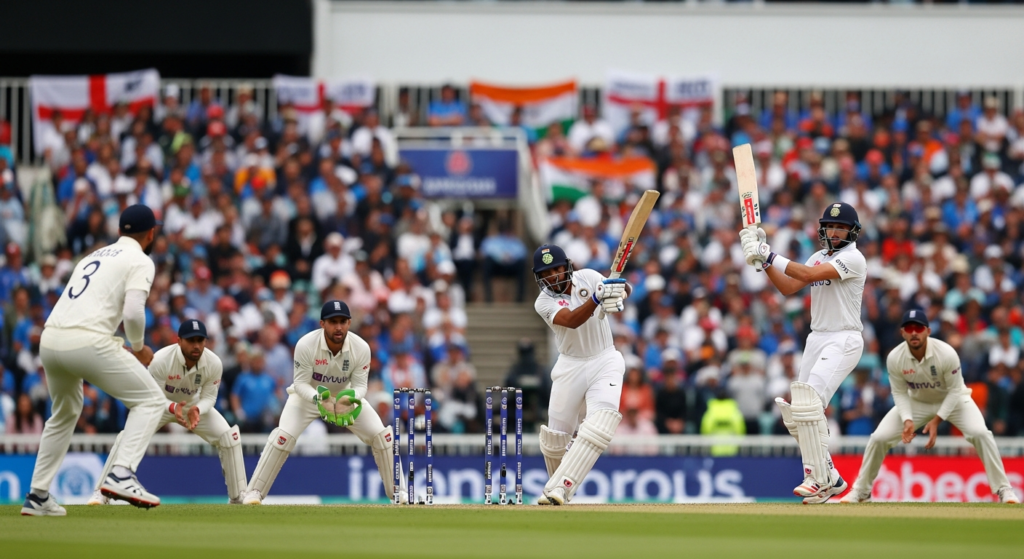
The 1990s are often remembered as the era of Sachin Tendulkar, whose performances against England became legendary. His maiden Test century at Manchester in 1990 saved India from defeat and announced the arrival of a generational talent.
England and India faced each other more frequently in both Tests and ODIs during this decade. The rivalry grew beyond bilateral series, extending into ICC tournaments. While England enjoyed home dominance, India became increasingly difficult to beat, particularly in subcontinental conditions.
This period also saw improvements in fitness, professionalism, and broadcasting, which brought England vs India matches to a global audience.
The 2000s: A Rivalry Goes Global
The 2000s marked a golden era for the England vs India rivalry. The famous 2002 NatWest Series final at Lord’s, where India chased down a large target and celebrated exuberantly, became an iconic moment in cricket history.
India’s historic Test series win in England in 2007 under Rahul Dravid was another milestone. Meanwhile, England responded with a series win in India in 2012, becoming one of the few teams to do so in the modern era.
This decade saw the rise of stars like Sourav Ganguly, Rahul Dravid, MS Dhoni, Andrew Flintoff, Kevin Pietersen, and Alastair Cook. The rivalry became more evenly matched, with both teams capable of winning at home and abroad.
The Rise of T20 Cricket: Late 2000s to 2010s
With the introduction of T20 cricket, the England vs India rivalry expanded into a faster, more explosive format. Both teams quickly adapted, producing thrilling matches filled with big hits and dramatic finishes.
India’s victory in the inaugural T20 World Cup in 2007 and England’s T20 World Cup win in 2010 added prestige to their encounters. Players like Yuvraj Singh, Virat Kohli, Jos Buttler, and Eoin Morgan became key figures in white-ball cricket.
The rivalry during this period was characterized by tactical innovation, aggressive batting, and deep squads, reflecting the evolution of modern cricket.
The Virat Kohli and Joe Root Era: 2010s
The 2010s were dominated by the leadership and batting brilliance of Virat Kohli and Joe Root. Series during this era were intense and high-profile, with both players producing memorable performances.
India’s 2016 home Test series win showcased its dominance in subcontinental conditions, while England’s strong showing at home in 2018 highlighted its adaptability. The rivalry extended into ICC events, including World Cups, where matches between England and India often carried major implications.
Fitness, fast bowling depth, and strategic planning defined this era, making contests more competitive than ever.
The World Test Championship and Modern Era: 2020s
In the 2020s, England and India continued to push the boundaries of Test and white-ball cricket. Their encounters in the World Test Championship, including the 2021 final where India fell short against New Zealand but faced England in crucial series, added context and stakes to bilateral matches.
England’s aggressive “Bazball” approach and India’s balanced squads featuring strong fast bowlers and versatile batters made recent series fascinating. Matches are now followed by millions worldwide, reflecting the commercial and cultural importance of this rivalry.
Impact on World Cricket
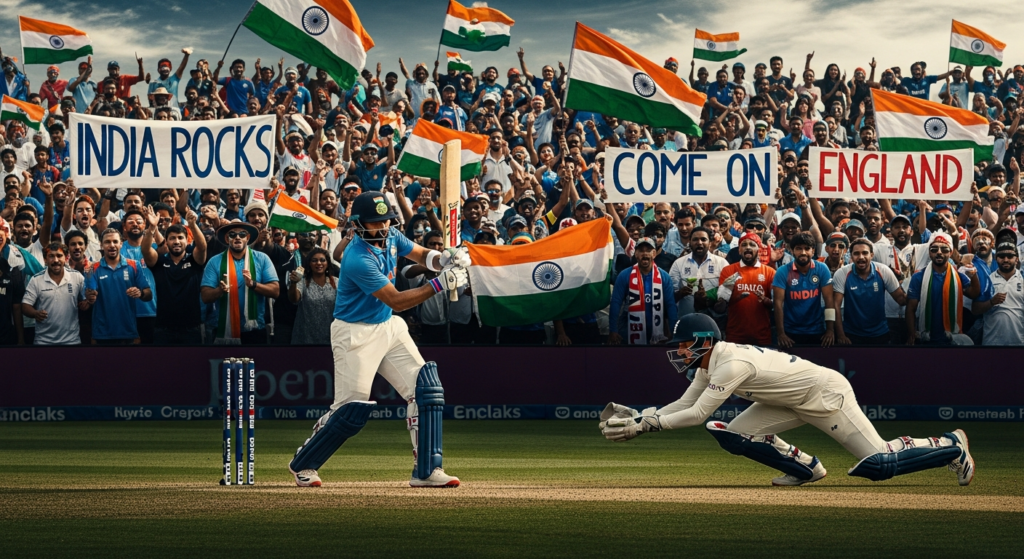
The England vs India rivalry has significantly shaped world cricket. It has influenced scheduling, broadcasting rights, and the global popularity of the sport. Matches between these teams are among the most watched and commercially successful, helping cricket expand beyond traditional boundaries.
Beyond statistics and trophies, this rivalry represents mutual respect, historical growth, and the shared evolution of cricket from a gentleman’s game to a global spectacle.
Conclusion
The timeline of the England cricket team vs India national cricket team rivalry tells a story of transformation, resilience, and excellence. From India’s humble beginnings in 1932 to its rise as a global cricketing powerhouse, encounters with England have played a crucial role in shaping its journey. Each era has added new chapters filled with legendary players, iconic matches, and unforgettable moments. As cricket continues to evolve, this rivalry remains one of the sport’s most compelling narratives, promising excitement and history with every series.
FAQs
When did England and India first play a cricket match?
England and India first played an official Test match in 1932 at Lord’s, which was India’s debut in Test cricket.
Which team has been more successful overall?
Historically, England held an early advantage, but in the modern era the rivalry is far more balanced across all formats.
What is the most famous England vs India match?
The 2002 NatWest Series final at Lord’s is often considered one of the most iconic matches between the two teams.
Who are some legendary players from this rivalry?
Notable players include Sachin Tendulkar, Sunil Gavaskar, Virat Kohli, Kapil Dev from India, and Ian Botham, Alastair Cook, Kevin Pietersen, and Joe Root from England.
Why is this rivalry so important in cricket?
This rivalry represents the historical, cultural, and sporting evolution of cricket, featuring two of the game’s most influential nations and consistently producing high-quality, memorable contests.
